
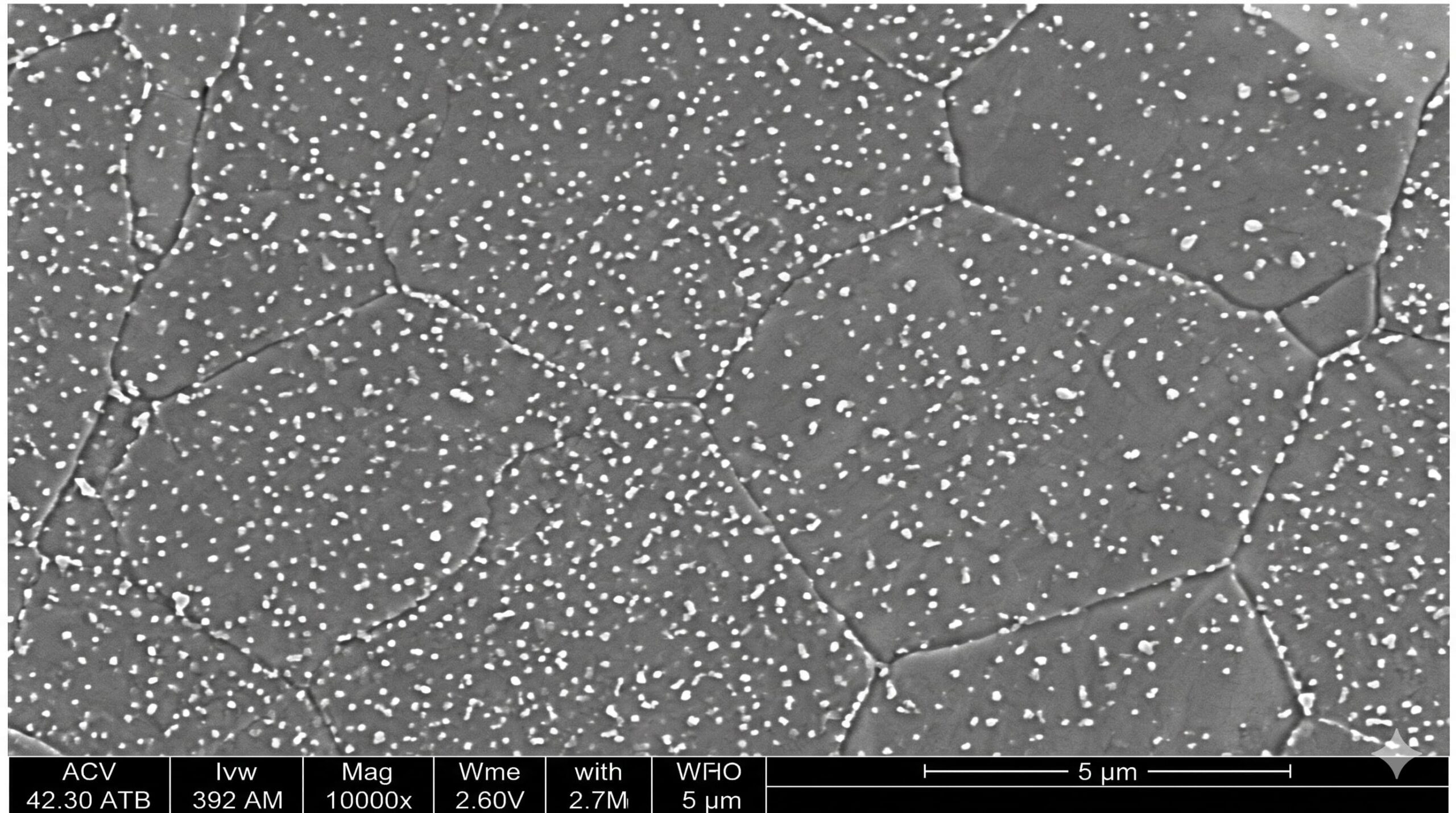
7075 aluminum represents a pinnacle of metallurgical engineering, serving as a cornerstone for high-stress applications ranging from aerospace structures to high-performance sporting equipment. Belonging to the 7xxx series of aluminum alloys, where zinc serves as the primary alloying element, this material is celebrated for its exceptional strength-to-weight ratio, which rivals many steels. In the scientific community, the study of aluminum alloy 7075 is an exploration of complex precipitation-hardening mechanisms and the delicate balance between high tensile strength and fracture toughness.
The Metallurgical Foundation of 7075 Aluminum
At its core, aluminum alloy 7075 is a multi-component system primarily composed of aluminum, zinc (5.1–6.1%), magnesium (2.1–2.9%), and copper (1.2–2.0%). While other elements like chromium, iron, and silicon are present in trace amounts to control grain structure and impurity levels, it is the Zn-Mg-Cu triad that dictates the alloy’s formidable mechanical properties.
The high strength of this material is derived from a process known as precipitation hardening (or age hardening). During this process, the alloying elements are first dissolved into a solid solution and then allowed to precipitate out in a controlled manner, forming nanometer-scale intermetallic particles. These particles act as obstacles to dislocation motion—the fundamental mechanism of plastic deformation—thereby “pinning” the lattice and increasing the overall hardness of the metal.
7075 T6 Aluminum: The Peak of Performance
Among the various tempers available, 7075 T6 aluminum is perhaps the most widely recognized and utilized. The T6 designation indicates a specific heat-treatment cycle: solution heat treatment followed by artificial aging.
- Solution Heat Treatment: The alloy is heated to approximately 480°C (900°F). At this temperature, the zinc, magnesium, and copper are fully dissolved into the aluminum matrix, creating a single-phase solid solution.
- Quenching: The material is rapidly cooled (usually in water) to “freeze” these atoms in place, creating a supersaturated solid solution.
- Artificial Aging: The metal is then reheated to a lower temperature, typically around 120°C (250°F), for a period of 24 hours.
During this aging phase, the transition from Guinier-Preston (GP) zones to the metastable eta-prime phase occurs. These eta-prime precipitates are exceptionally effective at impeding dislocations. The result is a material with a tensile strength of approximately 570 MPa (83,000 psi) and a yield strength of 500 MPa (73,000 psi)—figures that are nearly double those of standard structural steels while maintaining one-third of the density.

The Comparison: 6061 vs 7075 Aluminum
In the world of structural engineering, the debate of 6061 vs 7075 aluminum is ubiquitous. While both are heat-treatable alloys, they serve vastly different purposes based on their metallurgical profiles.
1. Composition and Strength
The 6061 alloy relies on magnesium and silicon (forming magnesium silicide precipitates), whereas 7075 relies on zinc and magnesium. In terms of sheer power, 7075 is the clear winner; its tensile strength is roughly 80% higher than that of 6061 T6.
2. Fabricability and Welding
Where 6061 excels is in its versatility. It is highly weldable and offers excellent corrosion resistance. Conversely, 7075 is generally considered “non-weldable” by conventional methods like TIG or MIG because its high copper and zinc content make it extremely susceptible to hot cracking in the fusion zone. For 7075, mechanical fastening (riveting) or advanced solid-state welding (like friction stir welding) is required.
3. Corrosion Resistance
6061 provides a superior protective oxide layer. While 7075 contains chromium to help mitigate stress corrosion cracking (SCC), the presence of copper makes it more prone to galvanic corrosion than the 6-series alloys.
| Property | 6061 T6 | 7075 T6 |
| Yield Strength | 276 MPa | 503 MPa |
| Primary Alloying Element | Magnesium & Silicon | Zinc |
| Weldability | Excellent | Poor (Limited) |
| Best For | General Purpose, Frames | Aerospace, High-Stress Parts |
The Structural Standard: 7075 Aluminum Plate
For industrial manufacturers, the 7075 aluminum plate is the primary form factor for machining critical components. Whether it is used for aircraft wing spars, gear shafts, or specialized mold toolings, the plate form must undergo rigorous ultrasonic testing to ensure no internal voids or inclusions exist.
A 7075 aluminum plate is often produced via hot rolling, which helps to refine the grain structure. Because the alloy is so strong, it exhibits significant “notch sensitivity.” This means that any surface defect or sharp corner can act as a stress concentrator, potentially leading to fatigue failure. Consequently, components machined from 7075 plate are often polished or shot-peened to induce compressive surface stresses, which significantly extends the fatigue life of the part.
Mechanical Properties and Fatigue Resistance
From a scientific standpoint, the fatigue resistance of aluminum alloy 7075 is one of its most studied attributes. In aerospace applications, parts are subjected to cyclic loading—the constant stress of take-offs, landings, and turbulence. 7075 exhibits an endurance limit (the stress level below which the material can withstand infinite cycles) that is impressively high for an aluminum alloy.
However, scientists must account for the alloy’s fracture toughness. While it is incredibly strong, it is less “forgiving” than softer alloys. If a micro-crack begins to propagate in a 7075 aluminum component, it can move more quickly than it would in a more ductile material. This necessitates a “damage-tolerant” design approach, where parts are regularly inspected using non-destructive testing (NDT) methods like X-ray or eddy current.
Environmental Sensitivity: Stress Corrosion Cracking
One of the historical challenges with 7075 t6 aluminum has been Stress Corrosion Cracking (SCC). This occurs when the material is subjected to a constant tensile stress in a corrosive environment (such as saltwater). The combination of stress and corrosion causes the intergranular boundaries to fail prematurely.
To combat this, metallurgists developed different tempers, such as T73. In the T73 temper, the material is “over-aged.” This slightly reduces the maximum tensile strength but significantly alters the grain boundary precipitates, making the alloy almost immune to SCC. This trade-off—giving up about 10-15% of strength for total environmental reliability—is a classic example of metallurgical compromise.
Modern Applications: From the Stratosphere to the Climbing Wall
The applications for 7075 aluminum are a testament to its reliability.
- Aerospace: It remains the gold standard for aircraft skins, fuselage structures, and support ribs.
- Defense: Used in the manufacture of high-stress components for firearms (receivers) and missile structures.
- Sporting Goods: High-end bicycle frames, rock climbing carabiners, and professional-grade ski poles utilize 7075 because failure in these items can be life-threatening, requiring the absolute highest safety margins.
- Tooling: Many plastic injection molds are machined from 7075 plate because of its high thermal conductivity and ability to withstand high clamping pressures without deforming.
Conclusion: The Enduring Legacy of 7075
In conclusion, 7075 aluminum remains an irreplaceable asset in the scientist’s and engineer’s toolkit. Its development in the 1940s marked a turning point in aviation, and its continued refinement in 2026 demonstrates that we are still finding ways to optimize this Zn-Mg-Cu powerhouse. While newer composite materials have entered the scene, the predictable behavior, high strength-to-density ratio, and established manufacturing infrastructure of 7075 ensure that it will continue to fly, climb, and support the world’s most critical structures for decades to come.
Understanding the microscopic dance of precipitates within the aluminum lattice allows us to push this material to its absolute limits, proving that in the world of metallurgy, the smallest details lead to the greatest strengths.


Leave a Reply