
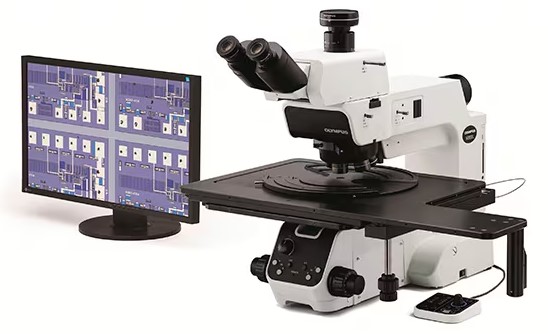
In the world of modern manufacturing and material science, precision is not just a goal—it is a requirement. Whether you are inspecting a microchip, analyzing a weld, or evaluating the grain structure of a new alloy, the industrial microscope is the most critical tool in your arsenal. Unlike biological microscopes designed for transparent slides, industrial microscopes are engineered to observe opaque objects using reflected light, providing a window into the microscopic integrity of the world around us.
What Defines an Industrial Microscope?
An industrial microscope is specifically designed for the inspection, assembly, and analysis of industrial components. The primary differentiator is the illumination system. Most industrial samples—metals, ceramics, and polymers—are opaque. Therefore, these microscopes utilize episcopic (reflected) illumination, where light travels through the objective lens, hits the sample, and reflects back to the sensor or eyepiece.
From the rugged stereo microscopes used on assembly lines to the high-precision metallurgical microscopes found in R&D labs, these instruments are built to withstand industrial environments while delivering sub-micron resolution.
The Digital Revolution in Industrial Microscopy
The traditional image of a scientist hunched over a pair of eyepieces is rapidly fading. The industry has shifted toward digital microscopy. By replacing or augmenting eyepieces with high-resolution digital cameras and sophisticated software, laboratories are unlocking new levels of productivity.
Digital industrial microscopes offer several transformative advantages:
- Ergonomics: Operators can view samples on a high-definition monitor, reducing neck and eye strain during long shifts.
- Collaboration: Multiple team members can view the live feed simultaneously, making it easier to discuss defects or research findings.
- Data Integration: Images can be captured, annotated, and shared instantly across a global network.
Beyond the Lens: The Power of Analysis Software
A microscope is only as good as the data it produces. In the modern lab, the hardware is just the beginning; the real magic happens in the software. Advanced platforms like MicroVision Suite turn a standard industrial microscope into an automated analytical powerhouse.
Extended Depth of Focus (EDOF)
One of the greatest challenges in industrial microscopy is the shallow depth of field at high magnifications. If you are looking at a fractured metal surface or a 3D electronic component, only a tiny slice of the image is in focus. EDOF technology solves this by capturing a “stack” of images at different heights and merging them into a single, crystal-clear composite where every detail is sharp.
Automated Grain Size and Phase Analysis
For metallurgists, quantifying the microstructure is essential for quality control. Software can now automate ASTM E112 grain size analysis, using AI to detect grain boundaries that the human eye might miss. Similarly, quantitative phase analysis allows labs to calculate the exact percentage of ferrite, pearlite, or porosity in a sample, ensuring the material meets strict industrial standards.
AI-Powered Hardness Testing
Integrating Vickers hardness testing into the digital workflow has eliminated the subjectivity of manual measurements. AI models can now automatically detect the diagonals of an indentation and calculate the HV value instantly, providing repeatable results that are independent of the operator’s skill level.
Key Applications Across Industries
Industrial microscopes are the silent guardians of quality across various sectors:
- Electronics and Semiconductors: Inspecting PCB solder joints, wire bonds, and micro-components for defects that could lead to catastrophic failure.
- Automotive and Aerospace: Analyzing engine components, turbine blades, and fasteners for fatigue cracks or improper heat treatment.
- Metallurgy: Evaluating the effects of alloying and processing on the internal structure of metals.
- Forensics and Failure Analysis: Determining exactly why a part broke by examining the fracture surface (fractography) at high magnification.
Choosing the Right Industrial Microscope System
When selecting a system for your facility, consider the following factors:
- Optical Quality: Look for plan-achromatic or apochromatic lenses to ensure flat fields and color accuracy.
- Lighting Versatility: Features like polarized light, darkfield illumination, and coaxial lighting are vital for revealing different surface textures.
- Software Compatibility: Ensure your software can handle advanced tasks like EDOF and automated measurements. A modular software approach allows you to upgrade your capabilities without buying a completely new microscope.
Conclusion
The industrial microscope has evolved from a simple magnifying tool into a complex data-gathering instrument. By combining high-quality optics with AI-driven software, modern industries can ensure that every component—from the smallest screw to the largest aircraft wing—is built to last. As we move toward Industry 4.0, the integration of digital microscopy and automated analysis will continue to be the cornerstone of innovation and safety in manufacturing.
Leave a Reply