
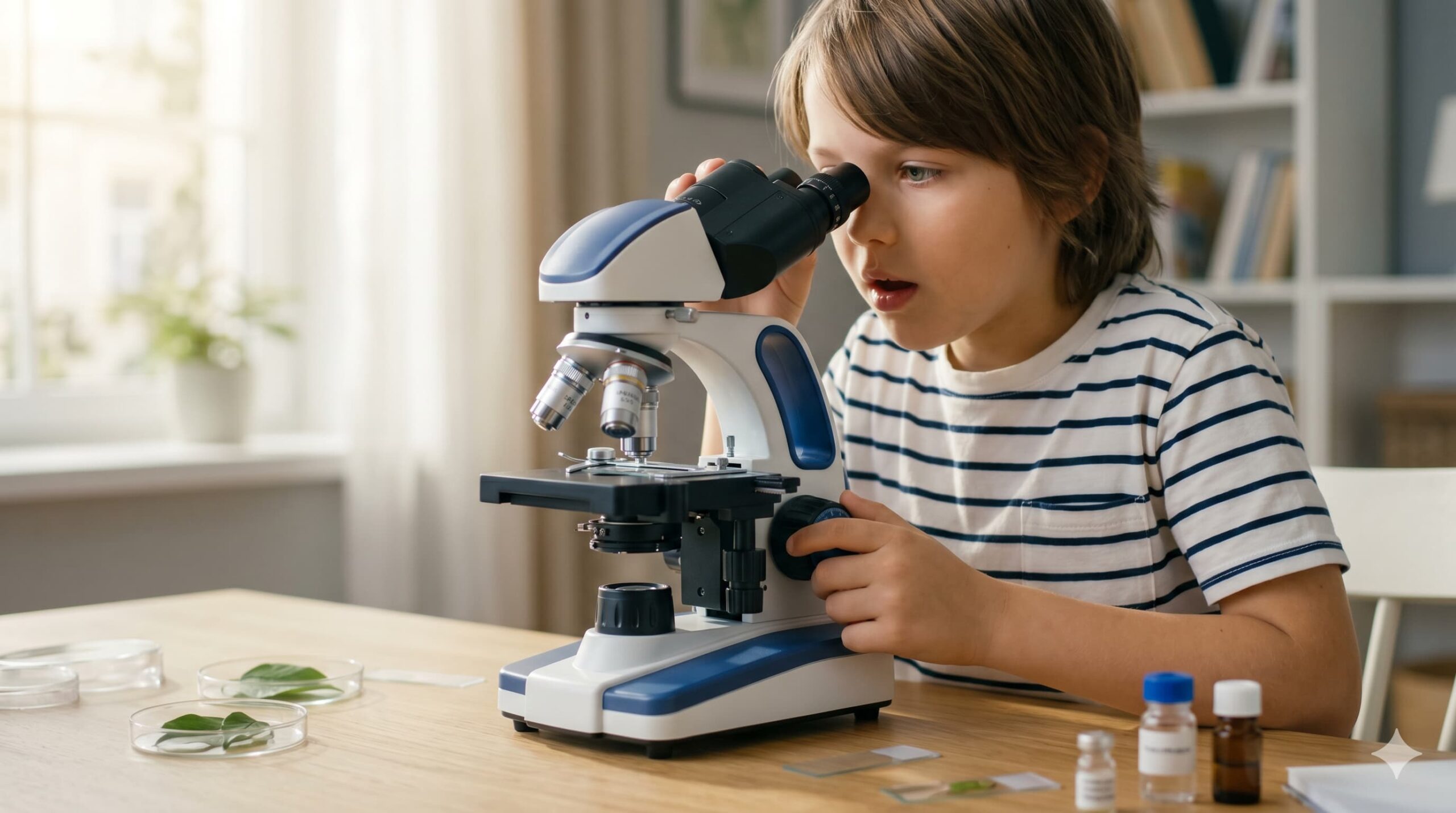
A microscope for kids is the primary portal through which the next generation of scientists, engineers, and medical professionals first encounters the fundamental architecture of our reality. In the context of early STEM (Science, Technology, Engineering, and Mathematics) education, providing an instrument that transcends the limitations of human ocular perception is a critical step in developing analytical thinking and observational rigor. As we navigate 2026, the technology behind these educational tools has undergone a significant transformation, moving from fragile, low-quality optical toys to robust, high-resolution systems capable of genuine biological and materials analysis.
The Pedagogical Impact of Early Microscopy
From a developmental perspective, the introduction of a microscope for kids serves as a catalyst for “inquiry-based learning.” Unlike static textbooks, a microscope offers a dynamic, real-time engagement with the natural world. When a child observes the cellular structure of an onion skin or the crystalline lattice of common table salt, they are not merely “looking”—they are performing an empirical investigation.
This transition from passive learning to active discovery fosters a scientific mindset. It teaches the importance of precision, the necessity of systematic observation, and the thrill of uncovering hidden truths. In an era dominated by digital abstractions, the tangible, physical reality of microscopy provides a grounded, evidence-based understanding of biology and chemistry.
The Digital Shift: Evaluating the Kids Digital Microscope
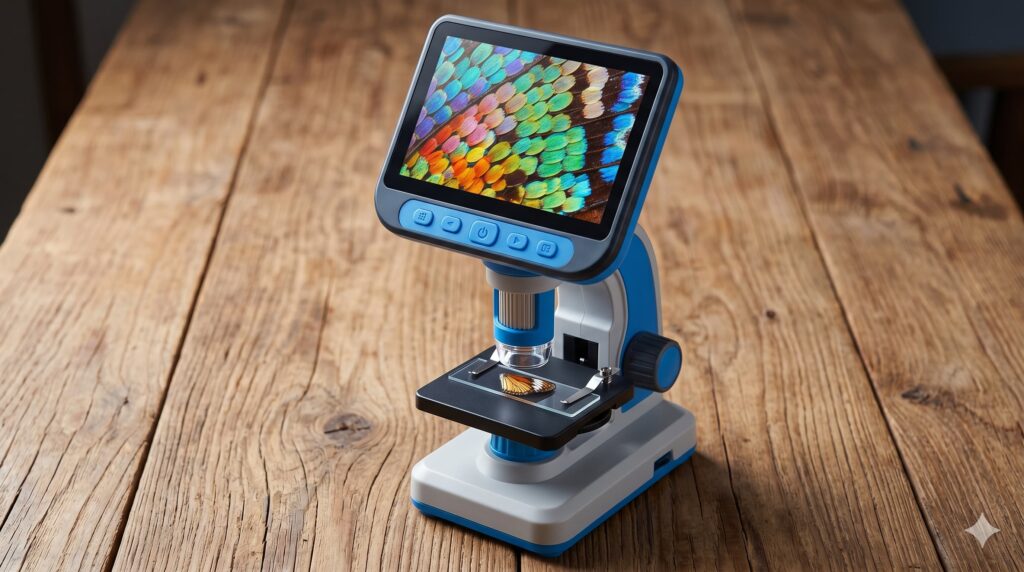
One of the most significant advancements in educational technology is the emergence of the kids digital microscope. Traditionally, young learners struggled with the ergonomics of binocular or monocular eyepieces. “Squinting” through a lens requires a level of motor control and ocular focus that many children find frustrating.
The kids digital microscope eliminates this barrier by projecting the magnified image onto an integrated LCD screen or a connected tablet. This shift offers several scientific and pedagogical advantages:
- Collaborative Observation: Multiple students can observe the same specimen simultaneously, fostering discussion and peer-to-peer learning.
- Ergonomic Comfort: It reduces eye strain and neck fatigue, allowing for longer, more focused sessions of observation.
- Digital Documentation: Most digital models allow for the capture of high-resolution images and videos, enabling students to build a digital portfolio of their findings.
Operational Methodology: How to Use a Microscope for Kids
To ensure a productive scientific experience, understanding how to use a microscope for kids is essential. Proper technique is what separates a frustrating attempt from a successful discovery. The methodology should be taught in a structured, step-by-step manner:
- Stability and Lighting: The instrument must be placed on a flat, vibration-free surface. If using an optical model, the light source (LED or mirror) must be adjusted to provide even illumination without over-saturating the specimen.
- Specimen Placement: Using a kids microscope set, the specimen should be mounted on a slide or placed in a petri dish. Young scientists should be taught to handle slides by the edges to prevent lipid contamination from fingerprints.
- The “Low-to-High” Principle: One should always begin at the lowest magnification. This provides a wider field of view, making it easier to locate the area of interest. Once centered, the user can rotate the nosepiece to a higher power.
- Fine Focus Control: At higher magnifications, the depth of field becomes incredibly shallow. Teaching a child to use the fine adjustment knob—moving it in tiny increments—is vital for resolving the intricate details of cell walls or insect morphology.
Exploring New Dimensions: The 1000x Handheld Digital Microscope for Kids
For field research and the study of non-transparent, 3D objects, the 1000x handheld digital microscope for kids has become an invaluable tool. Unlike stationary compound microscopes that require thin-sectioned slides, a handheld device can be placed directly onto tree bark, textiles, minerals, or even skin.
From a technical standpoint, the “1000x” claim in these devices is often a combination of optical magnification and digital zoom. In a scientific context, it is important to explain that while the magnification is high, the “resolving power” (the ability to see two points as distinct) depends on the quality of the CMOS sensor and the lens. These handheld units are excellent for teaching “Topographical Microscopy,” where the focus is on surface textures rather than internal cellular structures. They empower children to treat the entire world as their laboratory, moving beyond the desk and into the garden or the park.
The Laboratory Ecosystem: Selecting a Kids Microscope Set
A microscope is an isolated tool, but a kids microscope set is a complete laboratory ecosystem. When evaluating these sets for professional educational use, one must look for high-quality accessories that mimic real-world laboratory equipment. A comprehensive set should include:
- Prepared and Blank Slides: Allowing for both immediate gratification and the thrill of preparing one’s own specimens.
- Dissection Tools: Plastic or safety-standardized tweezers, spatulas, and needles for manipulating small samples.
- Biological Stains: Safe, non-toxic dyes (like Eosin or Methylene Blue) that allow children to see how contrast-enhancement works in professional pathology.
- Specimen Vials: Encouraging the collection and classification of samples from the natural environment.
A well-curated kids microscope set transitions the child from a casual observer to an active curator of their own microscopic collection.
Safety, Durability, and Optical Integrity
When selecting a microscope for kids, the scientific community emphasizes a balance between durability and optical integrity. The frame should be made of metal or high-impact, non-toxic polymer to withstand the rigors of enthusiastic use. However, the optics should remain glass-based where possible. Plastic lenses, while safer if broken, are prone to chromatic aberration and scratching, which can distort the image and lead to a loss of interest.
Furthermore, the light source should always be LED-based. LEDs remain cool to the touch, preventing accidental burns and ensuring that “wet” biological specimens (like a drop of pond water) do not evaporate too quickly under the heat of the bulb.
Conclusion: Cultivating the Scientists of Tomorrow
In summary, the microscope for kids is perhaps the most significant investment a parent or educator can make in a child’s intellectual development. Whether it is a traditional compound model or a modern kids digital microscope, the goal remains the same: to ignite a passion for the invisible mechanics of the universe.
By providing the right tools—from a kids microscope set to a high-powered 1000x handheld digital microscope for kids—we provide more than just a toy. We provide the equipment necessary for a lifelong journey of discovery. In 2026, the line between “educational” and “professional” continues to blur, allowing our children to see the world with a level of clarity and scientific rigor that was once reserved for the elite laboratories of the world.


Leave a Reply